Research · Monetary architecture
Monetary subordination in the eurozone
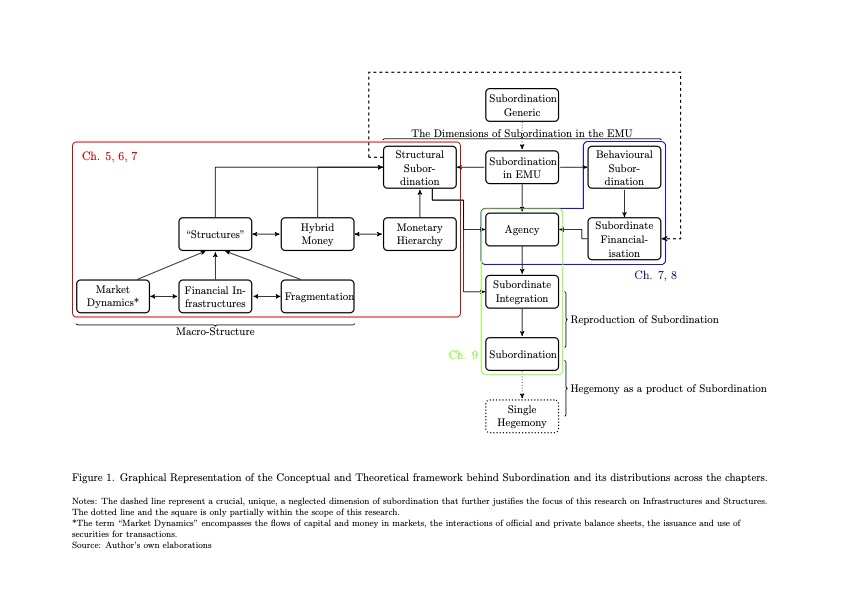
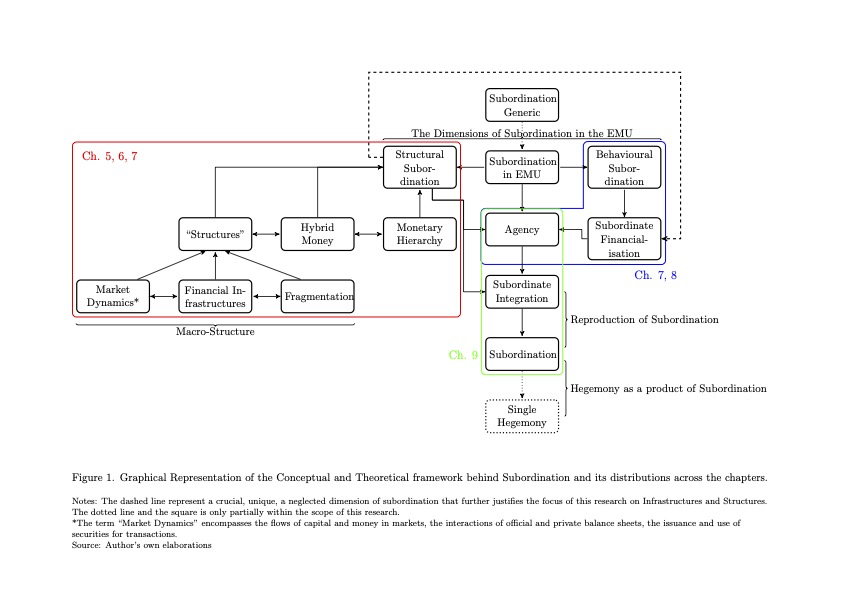
Subordination inside a monetary union is obvious in aggregate, persistent yield spreads, divergent productivity, and elusive in its specific forms. This thesis identifies the forms. A monetary union is the most extreme form of monetary integration, which makes subordination more visible in appearance and more subtle in mechanism at the same time. Shared money formalises it.
Three pillars
Monetary subordination in the EMU rests on monetary hierarchies, hybrid money, and the selective fragmentation and integration of euro-area markets and institutions. Each is taken twice: as it appears, and through the mechanisms that sustain it, with empirical support from official datasets that are largely unused, balance-sheet analysis and graphical representation.
Consequences
Italy. The single currency did not remove subordination; it reframed it. The centre shifted from the USD-based international system to a euro-centric form, with direct consequences for domestic economic development.
Six member states. A comparative analysis of financialisation shows subordinated EMU members behaving like subordinated emerging markets: their financialisation is shaped by their position in the hierarchy.
Outputs
Related publications
- Giordano, M. (2025). Monetary Subordination in the Eurozone: Pillars and Asymmetries. Competition & Change. DOI
- Giordano, M. and Pulieri, E. (forthcoming). From International to 'Regional' Financial Subordination: Italian Monetary Integration in the Eurozone. Cambridge Journal of Economics.
- Giordano, M. and Lapavitsas, C. (2023). Persistent institutional malfunctioning in the Eurozone. The Japanese Political Economy, 49(4): 295–307. DOI